 Gaurav
Is a South-Facing House Bad Vastu? What Smart Home Buyers Actually Need to Check
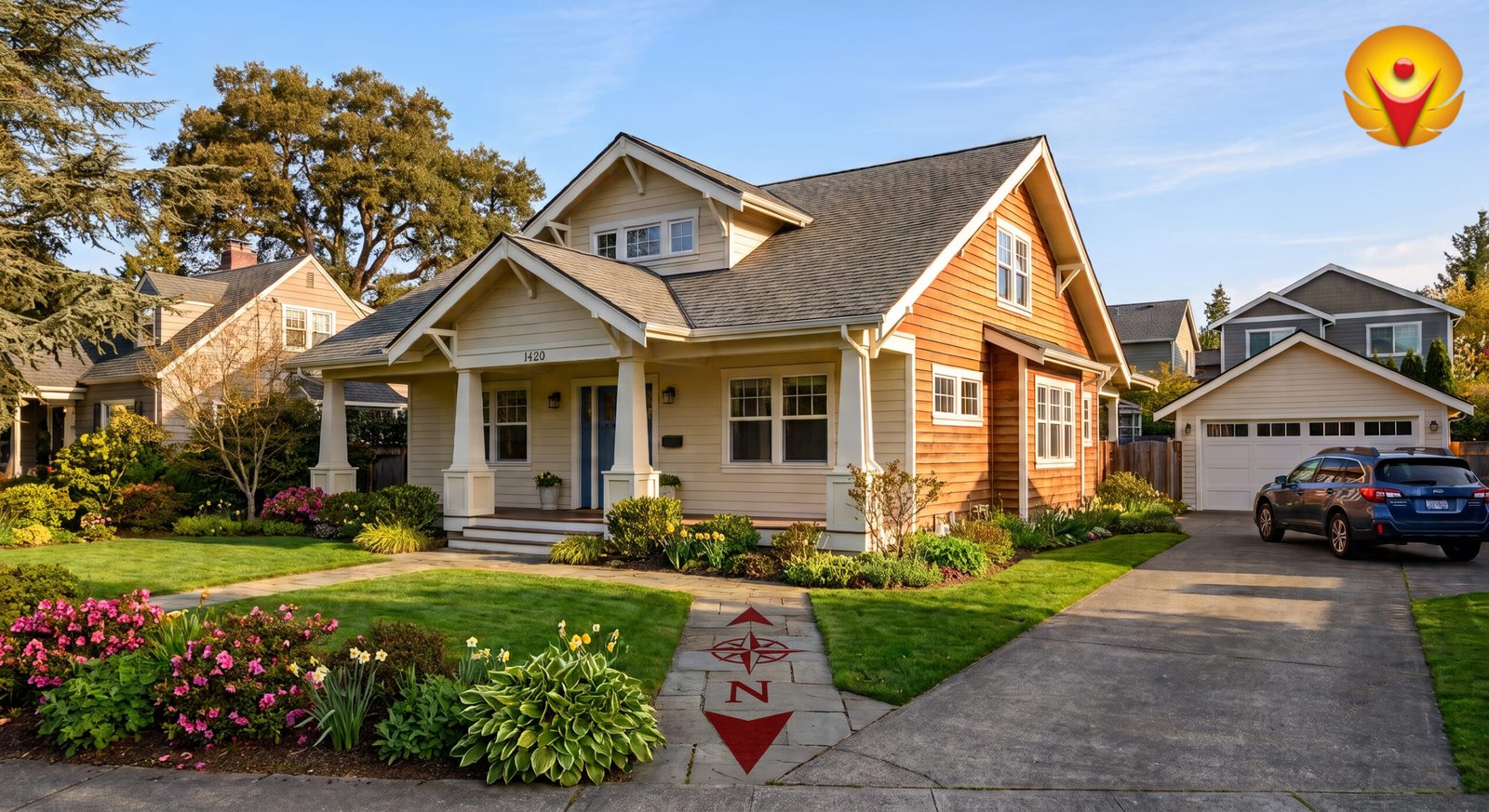
You’ve probably heard it from a well-meaning relative, a realtor, or a random online forum: never buy a south-facing house, it’s bad Vastu. It’s one of those pieces of advice that gets repeated so often it starts to sound like fact. But here’s the part almost nobody mentions — some of the wealthiest, most successful people in the world live in south-facing homes, and they’re doing just fine.
That contradiction is exactly why this topic deserves a closer look. South-facing house Vastu isn’t a simple yes-or-no rule. It comes down to three specific, checkable factors about the lot and the entrance — and once you understand them, you can evaluate any south-facing property with actual confidence instead of secondhand fear.
Why This Topic Matters
For home buyers, realtors, and investors across the US and Canada, orientation is one of the first filters people apply when shortlisting a property — often before square footage or price. If “south-facing” gets crossed off the list automatically, buyers can miss genuinely strong homes, and realtors can lose good matches for clients simply because of a rule that was never the full picture to begin with. Understanding the real criteria turns a vague superstition into a practical part of due diligence.
What’s Actually Going On
South-facing house Vastu comes down to three conditions. Get these right, and a south-facing home is not just acceptable — it can be excellent.
1. No T-point facing the entrance
The first thing to check is whether a road runs straight toward your home and ends right at it, forming a “T” shape with your property sitting at the top of the T. In Vastu, this is called a T-point, and it means the direct line of oncoming traffic and energy is aimed squarely at your front door instead of flowing past it. The concern isn’t mystical — a home taking the full, uninterrupted force of a straight approach road sits differently than one on a normal through-street. A south-facing house with a road pointed directly at its entrance is the one real red flag worth avoiding here.
2. No corner lot with roads on the east or west
The second condition is about the lot shape, not just the entrance. If your south-facing home also sits on a corner lot with an additional road along the east or west side, that’s considered a compounding factor. A single, clean south-facing frontage is very different from a lot boxed in by roads on two sides, since it changes how open space and traffic interact with the property. For south-facing homes specifically, a lot with only one road on the south side is preferable to a corner lot with a second road on the east or west.
3. The entrance must be true south, not southeast or southwest
This is the most technical, and most commonly misunderstood, of the three conditions. Vastu divides each compass direction into segments, and for the south wall, the entrance needs to fall within the true south zone, often called S3 or S4, the center portion of that wall. An entrance drifting toward the southeast or southwest corner is treated differently than one centered in true south, even though all three might look “south-facing” on a floor plan. The single biggest mistake in judging a south-facing home is treating any door on the south wall as equivalent, when the exact placement within that wall is what actually determines the outcome.
When all three of these line up — no T-point, no east or west corner road, and a true south entrance — a south-facing house is considered strong, not weak. That’s the piece of the “rule” most casual advice leaves out entirely.
Practical Tips
- Pull up the property’s plat map or satellite view before you tour it, and check whether any road runs directly into the lot from the front, forming a T-point.
- If the listing is a corner lot, note which side the second road is on — east or west matters far more than north or south.
- Ask the builder or seller for the exact entrance location on the floor plan, not just the general facing direction.
- Use a reliable digital compass app, not a decorative compass, to confirm true directions, since magnetic declination varies by region in North America.
- For homes already under contract, a professional can map the entrance and lot orientation against the true south zone — this kind of detailed assessment is something Gaurav’s team handles regularly, and you can learn more at vastukundli.com.
- If building custom, work with your architect early to keep the entrance centered on the south wall rather than shifted toward a corner.
- Don’t rule out a home based on facing direction alone before checking these three factors.
A Common Mistake or Misconception
The most common mistake people make is treating “south-facing” as a single category, good or bad, without checking any of the underlying details. In reality, two south-facing homes can have completely different outcomes depending on the road layout and exact entrance placement. A south-facing house is not automatically bad Vastu — the direction itself is neutral, and it’s the T-point, the corner lot, and the entrance position that actually decide the outcome. Skipping straight to a verdict based on the compass direction alone means missing the details that matter most.
USA & Canada Note
North American neighborhoods make these three checks especially relevant. Cul-de-sacs and T-intersections are extremely common in US and Canadian subdivisions, so a south-facing lot at the end of a street is worth a careful look. Corner lots are also standard in suburban planning, which means checking whether the cross street falls on the east or west side is a quick, practical step during a home search. For condo and townhome buyers, unit orientation is fixed and the entrance location can’t be changed, so this becomes purely an evaluation tool rather than a design choice. Custom-build buyers have the most flexibility, since architects can position the entrance within the true south zone from the start, and a basic compass app, adjusted for local magnetic declination, is enough to verify orientation on any lot.
Frequently Asked Questions
Quick answers related to this article — so you can apply the guidance with more clarity.
No. The outcome depends on whether there's a T-point road, whether it's a corner lot with a road on the east or west, and where the entrance is placed.
A T-point is when a road runs straight toward a property and ends right at it, so the home sits at the top of a "T" shape, with oncoming road energy aimed at the entrance.
An additional road on the east or west side is a compounding factor on top of the south facing. A single road on the south side alone is preferable to a corner lot with a second road.
Vastu divides each wall into segments for precise direction readings. S3 and S4 refer to the true south portion of the south wall, the ideal zone for a south-facing entrance.
It can be built there, but it's treated differently than a true south entrance. For a strong south-facing home, the entrance should sit in the true south zone, not drift toward a corner.
Yes, many do, which is part of why the blanket "never buy south-facing" advice doesn't hold up. When the three key conditions are met, it's not a liability.
Look at the property on a satellite map or plat map to see if any road runs straight into the lot from the front. A drive-by can also confirm it on-site.
A reliable digital compass app is usually enough for an initial check, accounting for local magnetic declination. For a precise true-south reading, a professional assessment is more reliable.
In many cases, yes, though it depends on the specific layout. This is best evaluated case by case with a proper site assessment rather than guessed at generally.
No — that would mean missing genuinely good properties. Use the three checks instead: T-point, corner lot orientation, and entrance placement, to evaluate each home individually.
.png)
Summary
A south-facing house is not something to automatically avoid, and it's also not something to accept without a second look. The real question comes down to three checkable factors: whether there's a T-point road facing the entrance, whether the lot is a corner with a road on the east or west, and whether the entrance itself sits in the true south zone. Get those three right, and a south-facing home can be a genuinely strong choice.